June 29, 2026
From Seeing to Explaining: How Computer Vision and LLMs Create True Operational Value


Computer vision didn’t need the generative AI boom to be useful – by 2024, industrial computer vision alone was a US$9.6 billion segment, growing at 17.6% annually (well before ChatGPT entered the conversation) proof that enterprises were already banking on it for measurable production value.
Today, most of the stage light has shifted to large language models, making computer vision seem secondary or obsolete to outsiders. But that narrative reflects just media attention insted operational reality.
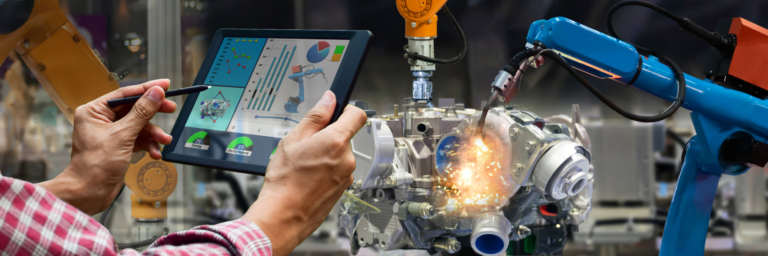
Real-world systems in manufacturing, aerospace, automotive, and logistics need both seeing and reasoning.
Computer vision is becoming even more powerful as part of multimodal systems that combine visual perception with language-based reasoning and explanation, and it will likely become more central as manufacturers, aerospace firms, automotive producers, and logistics operators realize they cannot reason about what they cannot perceive.
KEY TAKEAWAYS
Computer vision has quietly matured into a reliable, high-throughput way of seeing and measuring the physical world, especially in constrained industrial settings. Large language models, by contrast, have changed how people experience AI by making it easy to interact through conversational UI and natural language.
The real opportunity for enterprises lies in combining these strengths so that systems can both perceive what is happening and communicate why it matters in operational language.
Before LLMs: How Computer Vision Was Already Creating Value
Long before generative AI became a mainstream topic, computer vision was already embedded in workflows where repetitive visual inspection and monitoring dominate:
- Manufacturing: Real-time defect detection on parts and assemblies during production, achieving defect coverage rates approaching 90% with inspection decisions at 1–10 milliseconds per part (Source: Gitnux) Vision intelligence systems flagged scratches, misalignments, and component placement errors before parts moved down the line, automatically triggering quality holds or rework instructions.
- Warehouse and logistics: Pallet tracking systems monitored incoming and outgoing shipments, reading labels and detecting damage in real time. Shelves were scanned continuously to flag empty slots, misplaced inventory, or damaged goods—data that fed directly into inventory and replenishment systems without manual scanning.
- Retail: Store-mounted cameras verified shelf compliance (correct products in correct locations), detected empty facings before customers saw them, and flagged pricing inconsistencies or missing signage. Daily reports automated what used to require manual store walks.
- Healthcare: Radiologists and pathologists used vision-assisted image analysis to flag suspicious regions in X-rays, CT scans, and tissue slides, prioritizing high-risk cases and reducing the time spent on manual scanning. AI highlighted likely problem areas; humans made the final call.
- Agriculture: Fruit sorting lines used vision to grade by ripeness, size, and defects, automatically routing produce to appropriate markets or processing channels. Crop health cameras monitored field conditions, flagging areas needing irrigation, pest treatment, or harvest readiness.
Each of these workflows shared a common trait: cameras and models handled the visual complexity reliably, freeing humans to focus on decisions rather than observation. In manufacturing especially, systems reached industrial scale—handling high-speed lines without adding cycle-time penalties while delivering the measurable ROI that kept investment flowing.
Crucially, the impact of these systems has been measured in operational metrics rather than in demos. Organizations judged success by reductions in scrap and rework, higher line throughput, lower manual inspection costs, fewer safety incidents, and more consistent compliance with internal standards. In many plants and warehouses, computer vision quietly became part of the infrastructure. When it worked, it simply disappeared into the background as another dependable component of the operational stack.
Why LLMs Took the Spotlight
The public narrative around AI shifted dramatically when large language models arrived with accessible conversational interfaces. Anyone could ask a question, see a fluent answer, and share a screenshot.
This ease of demonstration, combined with readily shareable outputs like summaries and code .made language models the visible face of AI, even though many high‑value industrial systems were quietly powered by computer vision.
Computer vision followed a very different trajectory. Rather than being exposed as a consumer product, it was embedded deep in operational systems:
- On production lines, models inspected parts in milliseconds and sent results to MES or quality systems.
- In warehouses, cameras watched pallets and aisles while software updated inventory systems.
- In hospitals and clinics, image-analysis models supported radiologists without ever appearing as a separate interface.
When vision systems worked well, they became invisible. They produced fewer errors and better throughput, but they did not produce artifacts that executives could easily screenshot or demo in a board meeting. That relative invisibility made computer vision look less transformative at exactly the moment when conversational AI seemed revolutionary, even though the underlying business impact from vision was often larger and more mature.
Different Jobs: What CV Does Well vs. What LLMs Do Well
A helpful way to ground expectations is to look at computer vision and large language models side by side. They are not interchangeable tools; they solve different parts of the problem.
| Aspect | Computer Vision (CV) | Large Language Models (LLMs) |
|---|---|---|
| Primary role | Perceive and measure the physical world | Interpret, reason over, and communicate information |
| Typical input | Images and video | Text (and images for multimodal models) |
| Typical output | Structured detections, labels, measurements | Explanations, summaries, recommendations, conversations |
| Strengths | Speed, consistency, constrained inspections | Synthesis, explanation, policy and context mapping |
| Deployment pattern | Embedded in operational systems | Embedded in tools, apps, and conversational interfaces |
| Main failure mode | False positives/negatives, data drift | Fluent but incorrect or overconfident explanations |
Computer vision is built to answer questions like:
- Is there a defect on this part?
- Is this worker wearing the required safety equipment?
- Is this crate damaged?
- How many items are on this shelf?
It excels when the task is visually clear, repetitive, and constrained. Mature systems in these roles deliver 10–20% reductions in cost of poor quality, which is why industrial computer vision has sustained double-digit growth independent of the generative AI cycle.
This precision, speed, and consistency also explain why computer vision still beats LLMs for industrial inspection, safety, and compliance, especially where decisions must be based on measurable visual evidence rather than probabilistic language output.
Language models, in contrast, are built to answer questions like:
- What does this defect mean for our process?
- Which procedure applies to this kind of safety event?
- How should this incident be documented for compliance?
- How do we summarize these findings for a plant manager or regulator?
They excel at making information understandable, connecting events to policies, and turning data into narratives, reports, and action lists.
The common mistake is treating each technology as standalone. Multimodal LLMs are not designed for measurement-grade industrial perception across thousands of variable frames—they depend on structured vision pipelines to provide clean data. Computer vision alone, meanwhile, produces raw detections that lack explanation or clear decision pathways.
(Use Cases) Where the CV + LLM Combination Works Best
The strongest use cases emerge when organizations stop treating computer vision and large language models as separate capabilities and instead architect them as stages in a single workflow. In that workflow, computer vision provides structured, high‑volume observations of the physical world, while language models interpret those observations, connect them to business logic, and drive decisions and documentation.
On their own, detections rarely trigger action. A system that flags a defect, safety violation, or compliance gap still leaves critical questions unanswered: What should happen next? Why does this matter? Who is responsible for responding? Without an interpretive layer, visual findings remain technical events rather than operational decisions.
- In manufacturing, a vision system may reliably detect scratches, dents, or misalignments, but it does not perform root‑cause analysis, select corrective procedures, or assign tasks to the right engineer. A language model can take the structured defect data and generate explanations, propose likely causes based on historical patterns, and prepare non‑conformance reports that integrate directly with existing quality workflows.
- In workplace safety, detecting a PPE violation or unauthorized entry into a restricted area is only the first step. The detection needs to become a complete incident record that references applicable safety rules, reconstructs the timeline, and triggers notifications to supervisors or health and safety teams. That transformation from event to case file is exactly what a language layer adds.
- In compliance, visual findings such as missing labels, open safety doors, or damaged packaging must be turned into audit‑ready documentation. The organization needs a clear description of what was observed, when it occurred, why it is significant, and which regulation or internal standard applies. Raw detections alone cannot provide this level of traceable explanation.
The underlying pattern is straightforward: perception detects, reasoning contextualizes, and communication routes to action. Computer vision supplies verified observations; language models supply context, explanation, and workflow integration. When combined deliberately, they form a unified system that not only sees what is happening, but also understands its implications and initiates the right response.
Stop Workplace Incidents Before They Happen
KMS Technology’s AI-powered Worker Safety detects unsafe behaviors in real time using your existing cameras – no new hardware, no risk, proven to cut incidents by 80%.
How to Build Production-Grade Visual Intelligence Systems
The gap between a working prototype and a production deployment is substantial. Combining CV and LLMs in a lab is straightforward; scaling that combination to handle real environments, variable conditions, and continuous operation requires deliberate design.
On the perception side, computer vision systems must account for changing conditions: camera angles shift, lighting varies, backgrounds clutter, product variants arrive, and equipment wears. Models trained on clean, curated datasets will encounter drift. The solution is not a better model alone, but confidence thresholds, automated retraining pipelines, and human escalation rules that flag low-confidence detections for review.
On the language side, fluency can be misleading. Without constraints, language models generate explanations that sound authoritative but exceed what the visual evidence supports. They may infer causes from text patterns not validated by the current context or fail to express uncertainty clearly. Production systems require governance: strict boundaries between observation (what was detected), interpretation (what it means), recommendation (what to do), and speculation (what might happen).
In practice, production-grade multimodal systems require: Confidence thresholds and routing so low-confidence detections escalate to humans; standardized event schemas for consistent data flow between vision and language layers; evidence-backed constraints that anchor language model outputs to visual data; and continuous monitoring with audit trails linking behavior to individual detections and decisions.
The most successful deployments look less like open‑ended chat interfaces and more like structured decision‑support pipelines. Vision provides verified observations. Language provides context and documentation. Governance ensures accountability. This architecture, while less glamorous than an end-to-end AI system, is what actually survives contact with production environments.
For Whom Visual Intelligence Works
CV + LLM systems deliver the strongest ROI in industries where three conditions align: high operational costs for errors, mandatory documentation and audit trails, and existing workflows built around visual inspection. This describes manufacturing quality teams, aerospace and automotive compliance leaders, and operations directors in regulated environments.
- Why manufacturing and aerospace: Quality inspection, defect triage, and process documentation are not overhead—they directly impact scrap rates, rework cycles, warranty costs, and regulatory standing. A 2–3% improvement in defect detection or a 20% reduction in inspection cycle time translates to hundreds of thousands of dollars annually per production line. For quality managers, this is an immediate business case.
- Why automotive: The industry combines high-speed assembly inspection with strict traceability requirements. Dealers and insurers demand documentation of assembly quality and damage assessment for warranty and claims handling. For operations leaders and compliance officers, automated documentation that links defects to repair procedures and compliance records removes manual bottlenecks and reduces dispute risk.
- Why aerospace: Safety and compliance reporting are non-negotiable. Component inspection and damage assessment feed directly into maintenance logs, certification records, and regulatory filings. For compliance and safety teams, any system that accelerates inspection without sacrificing traceability—and turns raw findings into audit-ready reports—is immediately valuable.
- Why these sectors first: They share operational characteristics that make deployment feasible: existing camera infrastructure on production lines, stable workflows with clear decision rules, IT systems ready to integrate (MES, ERP, quality management platforms), and teams trained to work with structured data and protocols. Success is measurable in days (inspection cycle time), weeks (scrap reduction), and months (compliance documentation backlog).
The business case emerges quickly because these organizations are already paying for manual inspection, documentation, and rework. A CV + LLM system that automates these tasks while improving accuracy doesn’t require organizational change—it accelerates and formalizes what’s already happening.
Finding Partners Who Understand Computer Vision and LLMs
The hype around generative AI has created a partner selection problem. Nearly every IT organization now claims to be “AI-first,” but the claim often masks a narrow capability: building and tuning models, not architecting systems that connect perception, reasoning, and business outcomes.
The distinction matters. Building a CV + LLM system requires expertise across several domains—data engineering, computer vision, machine learning operations, compliance, and operational process design—integrated around a business objective, not a technology demo. Yet many partners approach these projects as model-building exercises: train a vision classifier, wrap an LLM around it, declare success. When the system encounters real data, variable conditions, or the need for audit trails, it fails silently or expensively.
What to look for in a partner:
- Accountability for total delivery. Partners who accept responsibility for the full pipelie – data collection, labeling, model training, governance implementation, integration with your systems, and ongoing monitoring. This means they share risk if the system doesn’t perform or doesn’t integrate.
- Business-to-tech translation. Partners who ask “what problem are you solving and what does success look like operationally?” before proposing technology. This usually means understanding your cost structures, compliance requirements, and existing workflows—not jumping to the latest architecture.
- Data and platform realism. Partners who acknowledge that data quality, infrastructure readiness, and team capability often matter more than model sophistication. They can tell you honestly if your current data is sufficient, whether you need a data lake redesign, or if a simpler approach will deliver more value faster.
- Full-stack capability without vendor lock-in. Partners who select tools—vision frameworks, LLM providers, deployment platforms, based on your specific needs and constraints, not on what they happen to specialize in. This includes the willingness to say “for your scale and cost profile, a smaller open-source model will outperform the flagship option.”
- Operations partnership, not project delivery. Partners who recognize that deployment is not the end; continuous monitoring, model drift detection, retraining pipelines, and team enablement are ongoing costs. They plan for this, not as a surprise post-launch.
The paradox is that organizations most likely to succeed with CV + LLM systems are those that resist the hype and choose partners focused on measurable outcomes, not demonstrations. That alignment between business need, technical choice, and delivery accountability is what separates pilots that scale from pilots that remain impressive one-time successes.
Strategic Implication: Moving From Automation to Operational Intelligence
The strategic question for enterprises is no longer whether computer vision is obsolete now that LLMs exist. The future of computer vision and artificial intelligence lies in building systems that combine seeing, measuring, reasoning, and action within a single operational loop.
Organizations that manage to do this move beyond narrow automation. Their systems can identify what happened, explain why it matters, and produce the documentation or action items that follow. They gain advantages in speed, quality, compliance, and governance because the same platform that perceives events can also communicate them in business language and tie them to procedures and policies.
In practice, that means treating computer vision and language models as complementary building blocks. Vision systems focus on the precision and consistency required to observe the physical world at scale. Language models focus on making those observations understandable and actionable for people and machines. When the two are connected thoughtfully, AI stops being a series of disjointed tools and becomes part of how the organization actually works.
FAQ
How do computer vision and LLMs work together in practice?


In a multimodal workflow, computer vision detects and measures events – defects on a production line, safety violations, damaged goods, missing labels – then passes structured outputs (labels, confidence scores, timestamps, locations) to an LLM. The language model explains what happened, links it to policies or procedures, generates reports or incident records, and routes the information to the right stakeholders or systems. Perception triggers the event; language turns it into action
What are the best use cases for combining CV and LLMs in industry?
Strong use cases appear wherever visual inspection and documentation are both critical. Examples include:
- Manufacturing: quality inspection, defect triage, and non‑conformance reporting.
- Workplace safety: PPE monitoring, restricted‑zone access, and incident documentation.
- Compliance: label and signage verification, safety door checks, and audit‑ready records.
- Retail: shelf monitoring, planogram compliance, and store‑level action lists.
How does this combination improve ROI compared to using only computer vision or only LLMs?
Standalone computer vision reduces scrap, rework, and inspection labor by automating visual checks, but it often leaves humans to interpret logs and decide what to do next. Standalone LLMs can explain and summarize information but rely on upstream data. When combined, CV and LLMs create end‑to‑end workflows that both detect problems and automatically produce the explanations, reports, and action items needed to resolve them. This closes the gap between detection and decision, which is where much of the operational value is realized
What are the main engineering challenges in deploying CV + LLM systems in production?
The hardest problems appear after the prototype stage. On the CV side, models must handle variable lighting, angles, occlusions, and changing products. On the LLM side, models must be constrained so they do not over‑interpret evidence or hallucinate causes. Reliable systems need clear confidence thresholds, standardized event schemas, grounding rules that separate observation from speculation, continuous monitoring, and audit trails that link language outputs back to underlying visual evidence
Category: