Get ahead with Computer Vision Solutions
Our Computer Vision solutions replace manual inspection with automated defect detection, process monitoring, and visual analytics – helping you increase throughput, lower inspection costs, and accelerate decision-making across your production and logistics workflows.
Computer vision solutions. Everything you have to know
What Is Computer Vision?
Computer vision is a field of artificial intelligence that enables machines to understand objects in digital images and videos, just like humans do, but faster and at scale. It works by extracting and analyzing visual data from the real world to improve efficiency, quality, and automation across industries.
Here’s how it works in practice:
- Image recognition: The system analyzes and classifies images, identifying what objects are present.
- Semantic segmentation: Every pixel in the image is labeled with a category, grouping similar objects together as one.
- Object detection: The AI detects where objects are located and identifies what they are.
- Instance segmentation: Similar to object detection, but it separates multiple objects of the same type, for example, recognizing several individual cars instead of just one “car” group.
- Video analysis: Applies the same intelligence to moving images, enabling real-time detection, tracking, and automation in video streams.
In simple terms, computer vision helps businesses see, understand, and act on visual information automatically, making operations smarter, faster, and more consistent.
How does computer vision translate into tangible ROI for my specific industry?
Computer vision delivers measurable ROI by directly impacting the key drivers of your business. In manufacturing, automated defect and anomaly detection boosts product quality, reduces waste, and minimizes unplanned downtime. In retail, shelf-monitoring and inventory intelligence prevent stockouts, optimize product placement, and drive revenue growth. In healthcare, image triage accelerates diagnoses, improves patient throughput, and enhances care quality.
The most effective approach is to quantify KPIs, such as defect reduction, inventory accuracy, or diagnostic speed. and map these outcomes to your core business objectives. This not only demonstrates tangible impact but also builds confidence among stakeholders, making the case for investment in computer vision initiatives.
How can we be sure our visual data is good enough for production-grade AI?
To ensure your visual data is production-ready, start by evaluating image quality (resolution, clarity, lighting) and annotation accuracy (correct, consistent, and comprehensive labels).
Check that the dataset represents real-world variability, including rare edge cases, and is balanced across classes and conditions.
Conduct data audits by profiling the dataset, manually reviewing samples, and performing error analysis on prototype models. Enhance the data with synthetic augmentation and active learning to fill gaps and improve generalization.
Finally, test model performance on unseen, real-world data, if accuracy drops significantly, it signals that more or better-quality data is needed. This process ensures robust, enterprise-grade AI performance.
How does this integrate with our current systems and workflows?
Computer vision solutions can be integrated via API-based, edge, or cloud deployments, offering flexibility to fit your existing infrastructure. By working closely with IT teams and embedding inference directly into current workflows, the technology enhances operations without causing disruption.
This approach aligns with best practices from leading AI vendors, ensuring smooth adoption, operational continuity, and measurable business impact.
How do we start small and scale effectively?
The best approach is to start with a focused, high-value pilot and scale using modular, reusable model components, while continuously tracking ROI and building internal support. This incremental strategy reduces risk, accelerates adoption, and turns early proof-of-concept wins into enterprise-wide impact, reflecting the most successful practices in industry for scaling AI initiatives.
How do you handle privacy, security, and compliance with regulations like GDPR or HIPAA?
Our approach follows the latest responsible AI and data protection standards. By combining edge-level anonymization, advanced encryption (AES-256, TLS 1.3), strict adherence to global privacy regulations, and fully auditable data pipelines, we ensure compliance without disrupting operations. These safeguards represent the gold standard for secure, compliant, and reliable computer vision deployment in regulated industries.
Why is Addepto the right partner for you?
Addepto brings years of proven AI expertise across industries like manufacturing, retail, logistics, and healthcare. We deliver end-to-end AI solutions. from machine learning model development to deployment, scaling, and MLOps, ensuring production-ready results and measurable ROI.
We’re not jumping on the AI bandwagon; our team has a long track record of implementing practical, high-impact AI solutions, such as automated image quality detection and luggage tracking for aviation.
Our clients





























Stages of Implementing a Computer Vision Solution


Problem definition
Define the exact computer vision task and success criteria considering hardware and environment constraints.
Data collection and preparation
Gather and clean diverse image or video data and apply augmentation for effective training.
Data annotation
Label images with bounding boxes, segmentation masks, or class tags for accurate learning.
Model selection and training
Choose appropriate model architectures and train with fine-tuning to optimize performance.
Model evaluation
Test the model on separate data to verify accuracy, robustness, and real-world applicability.
Deployment
Integrate the model on cloud, edge, or on-premises systems ensuring scalability and compatibility.
Computer vision solutions across industry




AI-Based Luggage Tracking System and Digital Twin
An advanced baggage tracking system using cameras and computer vision algorithms to monitor the real-time location of luggage at airports, creating a digital twin of logistical flows.
Problem solved: Difficulty locating lost luggage, operational delays, and human error in baggage management.
Benefits: Greater accuracy of baggage localization, reduced losses and delays, improved passenger service, and an overall boost in airport efficiency.
AI Assistance Bot
An interactive terminal bot that uses facial recognition to personalize assistance, help with navigation, and automate ticket handling for passengers.
Problem solved: Long waiting times for customer service, passenger confusion, and the need for personalized customer experiences.
Benefits: Faster service, personalized responses, partial automation (e.g., verification of identity), and increased customer satisfaction.
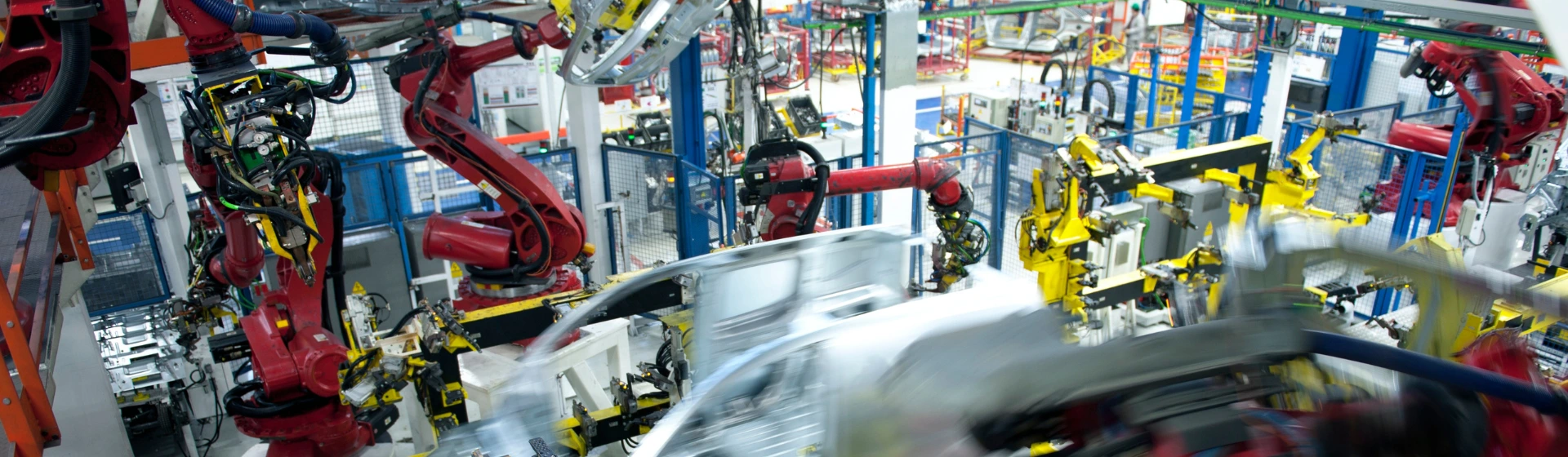
Streamlining Manufacturing: 30% Reduction in Manual Work with AI
A visual system analyzing manufacturing processes, detecting anomalies and defects using AI, with real-time reporting and quality optimization.
Problem solved: Time-consuming manual quality checks and low efficiency in error analysis.
Benefits: 30% reduction in manual labor, improved product quality, faster defect detection, and advanced reporting.
Advanced AI System for Seamless Bottle Recycling
A self-service recycling station using cameras and AI to identify material type, size, and quality of bottles, as well as to detect fraud attempts.
Problem solved: Incorrect waste sorting, long service times, and risk of fraudulent recycling activities.
Benefits: Efficient sorting, improved eco-friendliness, elimination of fraud, and faster user experience.
Automated AI Image Quality Detection Engine for Retail
An AI engine that evaluates product images uploaded by users, detecting blurriness, imperfections, or bad composition—enabling fully automated quality control.
Problem Solved: Poor image quality in online stores, burden of manual image verification, negative impact on sales.
Benefits: Real-time image screening, better product presentation, fewer returns and complaints, and increased customer trust.
We are trusted by global leaders
Hear it from our clients!
The communication process was smooth, which assured us that Addepto was devoted to preparing a high-quality product.
Director of Machine Learning – Wealth Management Company
Addepto’s flexible team reacts to tasks rapidly.
Head of IT – SMEO S.A.
Communication with the Addepto team was easy and fast. Continuous monitoring and measurement of our workflow helped to identify areas for improvement. Their approach from the start allowed us to improve the product taking into account all our requirements. The obtained result fully satisfied our company.
CPO of KeyedIn Solutions
Addepto delivered a platform with AI models that resulted in time savings. The team addressed the client's core problem and went above and beyond to understand the client's tech stack. Their technological expertise and state-of-the-art technologies complemented their business-oriented approach.
Michelle Medeiros Sr Director of Data & ML – Western Governors University
Their approach from the start allowed us to improve the product taking into account all our requirements. The obtained result fully satisfied our company.
Matthew Muldoon CPO – KeyedIn Solutions


Addepto has been ranked #143 on the Deloitte Technology Fast 500 EMEA list, achieving a remarkable revenue growth rate of 1,193%!

We have been recognized as a Top AI consulting company 2024 by TrueFirms

Addepto is one of Europe's FT1000 Fastest Growing Companies 2024 according to FT

We have been listed in the annual MAD Landscape 2023 in the Data & AI Consulting category

Addepto has been listed in the annual Deloitte Technology Fast 50 Central Europe 2023 ranking




What technologies do we use?








How computer vision benefits the business
How computer vision benefits the business

Automated quality control & defect detection
Computer vision enables continuous, high-speed visual inspection to identify surface defects, missing components, or faulty assemblies within milliseconds. In manufacturing sectors such as electronics, automotive, and concrete production, these systems now achieve over 99% accuracy, processing thousands of items per minute.

Real-time inventory and workflow optimization
AI-powered cameras track inventory levels, item movement, and shelf conditions in retail and warehouse environments, alerting staff to low stock or misplaced goods. Companies adopting these systems report up to 40% faster restocking cycles and nearly one-third fewer out-of-stock events, directly improving sales and customer satisfaction.

3D visual inspection and compliance auditing
Stereo-vision systems capture complete 3D representations of components, including surface texture and dimensions, to support digital documentation and traceability. Integrated with quality management systems, these solutions enable fully auditable production records for regulatory and customer compliance.
Learn more about computer vision solutions
Do you provide hardware, or only software?
We provide software only, covering model development, deployment, MLOps, and integration with existing camera and IT systems. Most implementations reuse clients’ existing IP or industrial cameras, connected via RTSP/SDK interfaces to minimize capital expenditure and accelerate time-to-value.
Can we reuse our existing cameras and infrastructure?
Yes. In most deployments, current cameras, storage, and network infrastructure are retained. When upgrades are needed, they are based on software-driven requirements such as resolution, frame rate, optics, or lighting conditions, ensuring the best possible model performance without changing the overall system architecture.
How are models monitored and updated after go-live?
Model performance is continuously tracked through metrics such as precision, recall, and false alarms per hour. Live monitoring detects data and model drift, and new samples are captured for retraining. Updates are deployed via CI/CD pipelines with canary or shadow testing and rollback options, ensuring consistent accuracy and latency within defined operational targets.
Edge vs. Cloud: Which deployment should we choose?
Cloud deployment offers centralized management, scalable training, and unified control, while edge deployment is better suited for low-latency inference, privacy-sensitive data, or unstable connectivity. Many enterprises adopt hybrid architectures that train models in the cloud, run inference locally, and synchronize metadata for monitoring, analytics, and updates.
What does a typical Computer Vision implementation timeline look like?
A standard rollout begins with a two-week data audit and pilot scope, followed by three to six weeks of labeling, prototyping, and baseline metric validation. Integration and initial deployment occur between weeks seven and ten, after which continuous monitoring, retraining, and scaling take place as the solution expands to additional sites or processes.
What team and skills are required on our side?
Key contributors typically include data engineers for pipelines and storage, ML or MLOps engineers for model training and deployment, and domain experts to define inspection or safety criteria. An annotation process, internal or partner-supported, ensures a steady flow of curated data for model improvement and long-term accuracy.
What’s the difference between OCR and computer vision?
Optical Character Recognition (OCR) focuses on extracting and digitizing text from images or documents, turning printed or handwritten text into machine-readable data. Computer Vision, on the other hand, goes far beyond text: it enables AI to understand, classify, and interpret entire visual scenes, including objects, defects, movements, or patterns.
In practice, OCR is a subset of Computer Vision, often used together, for example, in automating document processing, invoice extraction, or quality inspections that combine image and text analysis. Addepto integrates both technologies to build end-to-end intelligent vision systems tailored to specific business needs.
Our clients