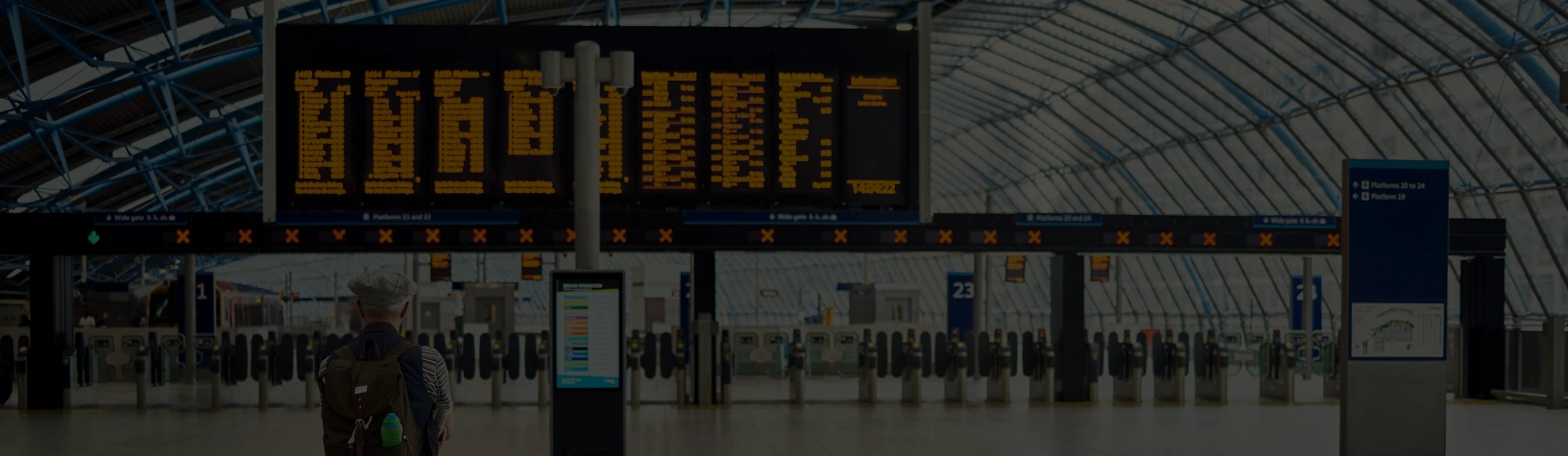
The client is a leading global aviation technology company delivering advanced airport and airside operations solutions worldwide. Their systems support critical functions such as deicing planning, airport capacity management, and operational decision-making for major international airports.
The company develops and maintains highly specialized, long-lived software systems written partly in a proprietary System Definition Language (SDL), making knowledge transfer and system evolution increasingly challenging as complexity grows.
To modernize legacy aviation software development and reduce engineering risk, a leading aviation technology company implemented an AI-powered code intelligence platform to transform complex proprietary code into a searchable, structured knowledge system.
Meet Our Client
The client is a multinational company that provides IT and communication services specifically for the air transport industry. While serving airlines, airports, and governments in over 200 countries, it specializes in areas such as baggage handling, border management, passenger processing, and aircraft communications.
The company plays a key role in enabling efficient and secure global air travel through its innovative technologies. Its systems are widely used to streamline airport operations and improve passenger experiences.
Case Study Shortcut
Challenge

Complex, Proprietary Legacy Codebase
The company relied on a custom SDL language developed over many years. Understanding existing logic required deep institutional knowledge, making development and maintenance difficult.

Fragmented and Implicit Knowledge
Critical business rules were scattered across source code, PDFs, technical manuals, and the experience of senior engineers. Much of the knowledge was undocumented or outdated.

Slow Developer Onboarding
New developers required 3–6 months to become productive due to the steep learning curve and lack of consolidated documentation.

Risky Changes and Limited Impact Analysis
Developers struggled to assess how code changes affected interconnected modules and systems, increasing the risk of regressions in safety-critical software.
Goal
The primary goal was to turn the existing legacy codebase into an intelligent, self-documenting knowledge system that supports developers throughout the software lifecycle.
Key objectives included:
- Automatically extract structure, logic, and semantics from proprietary code
- Enable natural language access to code and documentation
- Visualize dependencies and relationships across systems
- Preserve institutional knowledge and reduce onboarding time
- Reduce engineering risk when maintaining and extending critical aviation software
Outcome
The AI-powered code assistant delivered immediate value across engineering teams.
- Developers gained instant insight into complex legacy systems, significantly reducing dependency on senior engineers and undocumented tribal knowledge.
- Code understanding, maintenance, and documentation became faster, safer, and more consistent, enabling the company to modernize systems with confidence.

Before
-
Complex proprietary code understood by only a few experts
-
Documentation scattered across files and outdated manuals
-
Onboarding time of several months
-
High risk when modifying interconnected systems
-
Limited visibility into dependencies and business logic

After
-
Unified, searchable code knowledge platform
-
Automatically generated, up-to-date documentation
-
Faster onboarding and reduced reliance on key individuals
-
Clear visibility into code structure and dependencies
-
Safer maintenance and modernization of critical systems

Integrate those solutions in your company
Case Study Details
Approach
AI-Powered Code Understanding
- The platform analyzes source code to extract structure, logic, and semantics, even from proprietary languages like SDL.
Automated Documentation Generation
- Continuously generates human-readable documentation directly from the codebase, ensuring accuracy and consistency.
Knowledge Graph Construction
- Builds a semantic graph linking files, functions, rules, and dependencies to show how systems interact.
Conversational Code Assistant
- Provides a natural language interface that allows developers to ask questions about code behavior, logic, and impact without manual searching.