July 27, 2026
Knowledge Graph Optimization: How to Improve Enterprise Graph Performance


Modern AI applications depend on accurate, connected, and contextualized data. Meanwhile, traditional relational databases were not designed to represent complex relationships between business entities, making them difficult to scale for these new workloads.
So, how can we address this problem? One of the solutions implemented more and more is Enterprise Knowledge Graphs (EKGs), which create a unified semantic layer that connects business entities through explicit relationships. Instead of querying isolated datasets, organizations can explore interconnected business knowledge as a single source of truth.
At this point, many business leaders might think that solving a problem is simply implementing a knowledge graph, while in fact it is only the first step. Without proper optimization, enterprise deployments often struggle with growing infrastructure costs, slow graph traversals, inefficient memory utilization, and inconsistent AI responses caused by incomplete or poorly structured context.
KEY TAKEAWAYS
Why Traditional Data Architectures Cannot Scale for Enterprise AI
When businesses become increasingly interconnected, answering seemingly straightforward questions often requires joining data from dozens of systems.
Examples include:
- Which suppliers are indirectly affected by disruptions at a Tier-2 manufacturer?
- Which customers share hidden behavioral patterns across multiple business units?
- How are financial transactions connected through intermediary entities?
- Which contracts expose the organization to cascading operational risks?
Each additional relationship introduces another SQL join, increasing computational complexity and slowing query execution. As datasets continue to grow, performance deteriorates while infrastructure costs rise.
Knowledge graphs approach this challenge differently.
Rather than reconstructing relationships during every query, they persist relationships as first-class citizens within the data model. Traversing a relationship becomes a lightweight graph operation instead of an expensive series of relational joins.
This shift fundamentally changes how organizations explore enterprise knowledge.
Instead of asking databases to reconstruct business context at query time, the context already exists inside the graph.
What Is Knowledge Graph Optimization?
Knowledge Graph Optimization is the continuous process of improving the performance, scalability, and overall usability of a knowledge graph throughout its lifecycle. While often associated with database tuning, its scope is significantly broader.
Effective optimization spans data architecture, graph design, distributed computing, machine learning, and Generative AI, ensuring that every component contributes to a reliable and efficient knowledge platform.
Well, but how it looks in practice?
Knowledge graph models business information as a network of connected entities. Customers purchase products, suppliers provide components, employees belong to departments, and contracts define relationships between organizations.
Because these connections are stored directly within the graph, applications can navigate complex business relationships without relying on expensive joins or manually maintained integration logic.
When the graph expands, its complexity grows exponentially. Additional entities create new relationships, longer traversal paths, and larger search spaces. Queries become more computationally demanding, distributed workloads generate additional network traffic, and AI applications may retrieve excessive or irrelevant context.
Knowledge Graph Optimization ensures that these challenges do not limit the graph’s ability to support enterprise-scale workloads.
Did you know?
Google’s Knowledge Graph has amassed over 500 billion facts about 5 billion entities.
Core Areas of Knowledge Graph Optimization
Optimizing a knowledge graph requires a holistic approach that spans infrastructure, data architecture, and AI capabilities. While individual optimization techniques target different layers of the platform, they all share the same objective: enabling the graph to deliver connected knowledge efficiently as data volumes, user demand, and AI workloads continue to grow.
Knowledge Graph Storage and Index Optimization
The physical design of a knowledge graph has a direct impact on both performance and operational cost. Enterprise knowledge graphs often contain millions or even billions (!) of entities and relationships, making efficient storage essential for maintaining responsive applications and controlling infrastructure expenses.
Modern graph platforms rely on a combination of compression techniques, optimized serialization formats, and memory-efficient data structures to reduce their overall footprint.
Frequently repeated values, such as entity identifiers or property names, are typically stored only once and referenced throughout the graph, significantly reducing memory consumption without sacrificing accessibility.
Indexing plays an equally important role. Instead of scanning the entire graph during every query, indexes allow the database to locate relevant entities and relationships almost instantly.
However, effective indexing is not about indexing everything. Excessive indexes consume additional storage and slow down updates, while insufficient indexing forces the system to perform unnecessary scans. The most effective strategy is therefore driven by actual business workloads, prioritizing the entities, relationships, and properties that are accessed most frequently.
Together, storage optimization and intelligent indexing provide the foundation for scalable graph operations. They reduce infrastructure costs, accelerate data loading, and create the conditions for efficient graph traversal and query execution.
Query and Graph Traversal Optimization
One of the defining strengths of a knowledge graph is its ability to answer questions that involve multiple interconnected entities. Obviously, this capacity has its pros and cons. While databases can navigate relationships directly, traversing them efficiently becomes increasingly challenging.
A poorly designed query may explore thousands of unnecessary paths before reaching the desired result, consuming excessive CPU, memory, and network resources along the way.
Query optimization focuses on minimizing this overhead by selecting the most efficient execution strategy. Applying selective filters early, reducing unnecessary relationship expansions, and optimizing traversal order can dramatically improve execution time without changing the underlying data model.
Traversal optimization follows a similar principle. Not every relationship contributes equally to answering a business question, and exploring every possible path is rarely practical. Modern graph engines therefore prioritize the most relevant connections while limiting unnecessary exploration. Frequently accessed paths may also be cached or materialized, allowing repeated analytical workloads to execute significantly faster.
These techniques become particularly valuable in applications such as fraud detection, cybersecurity, and supply chain analytics, where queries often span multiple layers of relationships. In these scenarios, optimization determines whether complex analyses complete in seconds or minutes.
Optimizing Complex Knowledge Graph Queries
Analytical workloads frequently involve cyclic patterns, many-to-many relationships, and deep traversals that generate large intermediate result sets before producing a final answer. Traditional execution strategies often process these relationships sequentially, creating temporary datasets that consume considerable computational resources before being discarded.
Modern graph databases increasingly address this problem through advanced query planning and algorithms such as Worst-Case Optimal Joins. Rather than evaluating relationships independently, these algorithms consider the structure of the query as a whole, significantly reducing unnecessary computations and improving performance for highly connected datasets.
From a business perspective, these optimizations translate directly into faster analytics, more predictable application performance, and lower infrastructure costs. They also enable organizations to support interactive use cases where users expect complex graph queries to return results almost instantly.
Distributed Graph Processing for Enterprise Knowledge Graphs
A single server often becomes insufficient to store and process the entire dataset. Enterprise deployments therefore distribute graph data across multiple machines, using big data technology to process huge data sets while allowing storage capacity and computational resources to scale horizontally.
While distributed architectures increase scalability, they also introduce new challenges. Every time a query traverses relationships stored on different servers, additional network communication is required. For workloads involving long traversal paths, this overhead can quickly become the dominant factor affecting performance.
Effective graph partitioning minimizes these costs by placing frequently connected entities close together whenever possible. Instead of distributing data randomly, modern partitioning strategies analyze both graph structure and query patterns to identify groups of entities that are commonly accessed together. Keeping these communities within the same partition significantly reduces cross-server communication and allows a larger portion of each query to execute locally.
High-degree nodes require particular attention. Certain entities may participate in thousands of relationships and become hotspots for graph activity. Replication, intelligent caching, and specialized indexing help distribute the workload associated with these highly connected nodes, preventing them from becoming performance bottlenecks as the graph continues to grow.
When implemented effectively, distributed optimization enables knowledge graphs to scale to enterprise volumes while maintaining predictable performance and efficient resource utilization.

Semantic Optimization for Enterprise Knowledge Graphs
The technical performance of a knowledge graph depends not only on how efficiently it stores and processes data, but also on the quality of its semantic model. A graph that contains inconsistent terminology, duplicate entities, or conflicting relationships may execute queries quickly while still producing unreliable insights. Semantic optimization addresses this challenge by ensuring that the graph accurately represents business knowledge and remains consistent as new data sources are introduced.
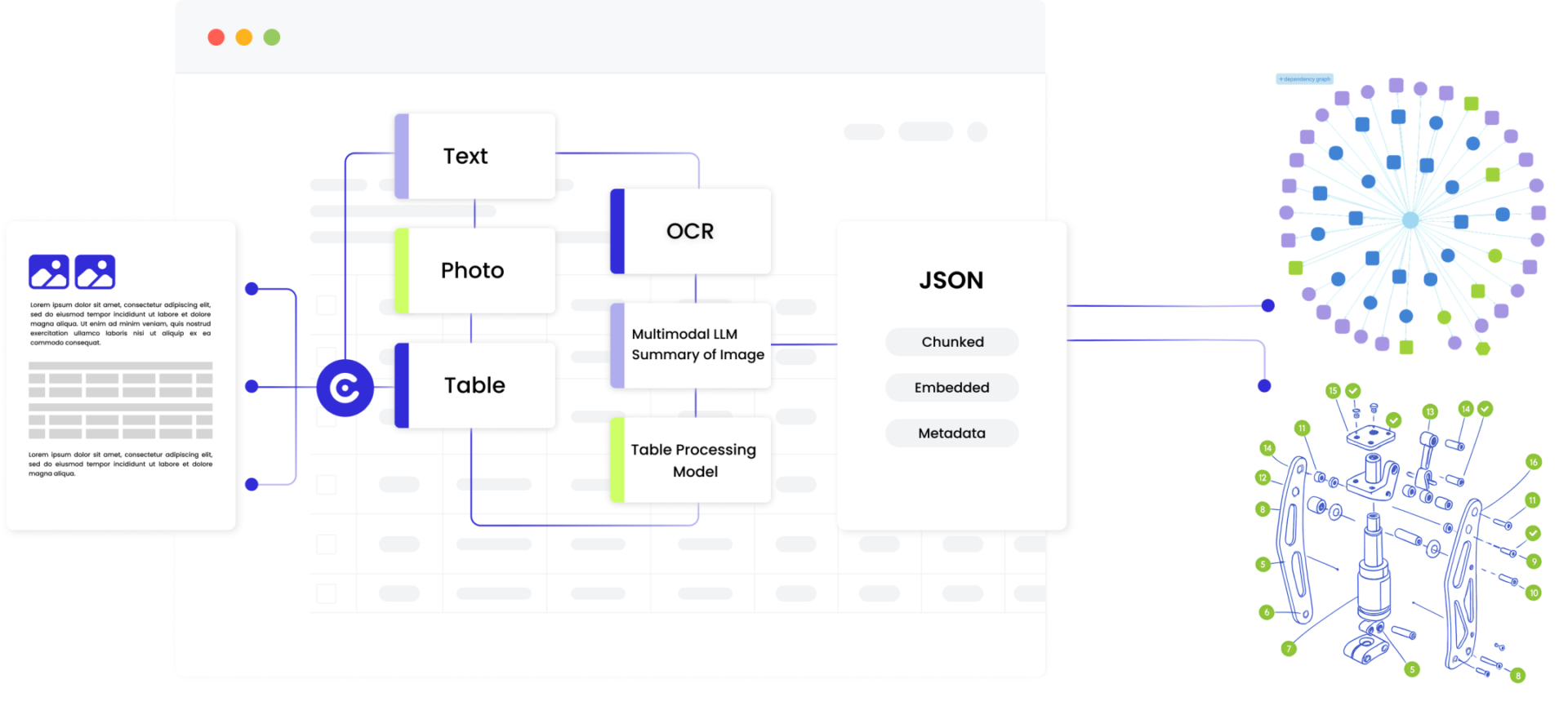
These semantic capabilities are particularly valuable when organizations need to connect specifications, manuals, engineering drawings, maintenance records, and other related files. The power of knowledge graphs in managing complex technical documentation lies in representing not only individual documents, but also the entities, components, dependencies, and processes described across them.
Ontology Design and Evolution
An ontology provides the conceptual framework of a knowledge graph. It defines which entities exist, how they relate to one another, and which business rules govern those relationships. A well-designed ontology enables different departments and applications to interpret data consistently, creating a shared understanding across the organization.
Designing an ontology requires balancing expressiveness with simplicity. An overly simplified model may fail to capture important business concepts, while an excessively detailed ontology can become difficult to maintain and unnecessarily complicate query execution. The objective is to create a semantic structure that accurately reflects the business domain without introducing avoidable complexity.
Entity Resolution and Data Consistency
Enterprise data is rarely free from duplication. The same customer may appear under multiple identifiers across CRM and ERP systems, suppliers may be recorded with slightly different names, and products often exist under several internal classifications. If these inconsistencies remain unresolved, they fragment the knowledge graph and reduce the accuracy of downstream analytics and AI applications.
Entity resolution addresses this problem by identifying records that refer to the same real-world object. Modern approaches combine deterministic matching rules with statistical methods and machine learning models to evaluate similarities across attributes, relationships, and contextual information. Rather than relying on a single identifier, they assess multiple signals before determining whether two records should be merged.
Accurate entity resolution significantly improves the completeness of the graph. It enables organizations to build unified customer profiles, consolidate supplier information, and strengthen relationship analysis, ultimately increasing the reliability of recommendations, fraud detection models, and AI-generated insights.
Data Quality as a Continuous Process
Knowledge graphs continuously integrate information from operational systems, external data providers, documents, and streaming events. As these sources evolve independently, maintaining consistent data quality becomes an ongoing challenge rather than a one-off validation exercise.
Effective optimization therefore incorporates automated quality controls throughout the lifecycle of the graph. Validation rules help identify missing or contradictory information, confidence scores indicate the reliability of individual facts, and lineage tracking preserves information about the origin and freshness of every relationship. Instead of hiding inconsistencies, modern knowledge graphs expose them transparently, allowing both analysts and AI systems to evaluate the credibility of available information.
This approach is particularly valuable for Enterprise AI, where explainability is becoming as important as accuracy. When language models retrieve information from a knowledge graph, they can reference not only the underlying facts but also their provenance, confidence level, and supporting evidence, providing significantly greater transparency than traditional retrieval approaches.
Optimizing Knowledge Graphs for Generative AI
The rapid adoption of Generative AI has expanded the role of knowledge graphs far beyond analytics and search. Increasingly, they serve as the structured knowledge layer that grounds Large Language Models, recommendation engines, and autonomous AI agents. As a result, optimization strategies must now address not only graph performance but also the efficiency with which knowledge is delivered to AI systems.
Graph Embeddings and Representation Learning
Many AI applications require graph data to be represented in a numerical form that machine learning models can process. Graph embeddings achieve this by transforming entities and relationships into dense vector representations while preserving the structural characteristics of the graph.
These representations allow models to identify similarities between entities, predict previously unknown relationships, detect anomalies, and generate personalized recommendations. Rather than relying exclusively on manually defined business rules, organizations can discover hidden patterns directly from the graph structure.
Incremental learning techniques allow models to update only the affected portions of the graph instead of retraining from scratch after every change. This reduces computational costs while ensuring that AI applications remain aligned with the latest business information.
Optimizing GraphRAG
One of the most promising applications of enterprise knowledge graphs is Graph Retrieval-Augmented Generation (GraphRAG).
It retrieves structured knowledge represented through connected entities and relationships. This allows language models to reason over business context rather than disconnected documents.
The additional context provided by GraphRAG also introduces new optimization challenges. Retrieving excessively large subgraphs increases token consumption, raises inference costs, and may overwhelm the language model with information that is only marginally relevant to the original question.
Modern GraphRAG pipelines therefore prioritize precision over volume. Instead of maximizing the amount of retrieved knowledge, they identify the smallest subgraph capable of answering a user’s query accurately. Techniques such as path ranking, subgraph pruning, community detection, relationship filtering, and hierarchical summarization reduce unnecessary context while preserving the connections that are most important for reasoning.
This optimization benefits both model quality and operational efficiency. Responses become more accurate, easier to explain, and significantly less expensive to generate, making GraphRAG a practical solution for enterprise-scale AI applications.
Business Benefits of Knowledge Graph Optimization
Deploying a knowledge graph alone does not guarantee business outcomes. The greatest value comes from optimizing the underlying architecture to support enterprise-scale AI and analytics.
Organizations that invest in graph optimization can expect benefits across multiple dimensions:
- Lower cloud infrastructure costs through more efficient storage and memory utilization.
- Faster analytical queries, reducing response times from minutes or hours to seconds—or even milliseconds.
- Improved AI accuracy by grounding language models in structured enterprise knowledge.
- Greater scalability as data volumes, users, and AI workloads continue to grow.
- Reduced integration effort through a unified semantic layer that connects previously isolated systems.
- Increased trust in AI by providing transparent, explainable reasoning paths.
Knowledge graph optimization is therefore not simply an infrastructure initiative.
It is a strategic investment in the data foundation required to support intelligent, scalable, and trustworthy enterprise AI.
FAQ
How do you measure knowledge graph performance?


Knowledge graph performance should be measured across multiple dimensions, including query response time, graph traversal efficiency, indexing effectiveness, storage utilization, scalability, and AI retrieval quality. Organizations should also monitor business KPIs such as analytics speed, infrastructure costs, GraphRAG accuracy, and user satisfaction to evaluate the overall impact of optimization efforts.
What are the most common knowledge graph optimization mistakes?
The most common mistakes include over-indexing the graph, using poorly designed ontologies, ignoring entity resolution, retrieving excessive context for GraphRAG applications, and optimizing only infrastructure while overlooking semantic quality. These issues often lead to higher infrastructure costs, slower queries, and less reliable AI outputs.
What are the best practices for knowledge graph optimization?
Successful knowledge graph optimization combines technical and semantic improvements. Best practices include designing scalable ontologies, optimizing storage and indexing based on query patterns, minimizing unnecessary graph traversals, maintaining high data quality, continuously resolving duplicate entities, and tailoring GraphRAG retrieval to deliver only the most relevant business context.
What should be included in a knowledge graph optimization checklist?
A practical optimization checklist should cover:
- Storage and index optimization
- Query and traversal performance
- Graph partitioning and distributed processing
- Ontology governance
- Entity resolution and deduplication
- Continuous data quality monitoring
- Graph embedding updates
- GraphRAG retrieval optimization
- Performance monitoring and benchmarking
- Infrastructure cost optimization
Why is knowledge graph optimization important for enterprise AI?
Enterprise AI systems depend on fast, accurate, and trustworthy data retrieval. Knowledge graph optimization improves AI performance by reducing query latency, increasing GraphRAG precision, lowering token consumption, strengthening explainability, and enabling scalable analytics across complex enterprise datasets.
Category: